
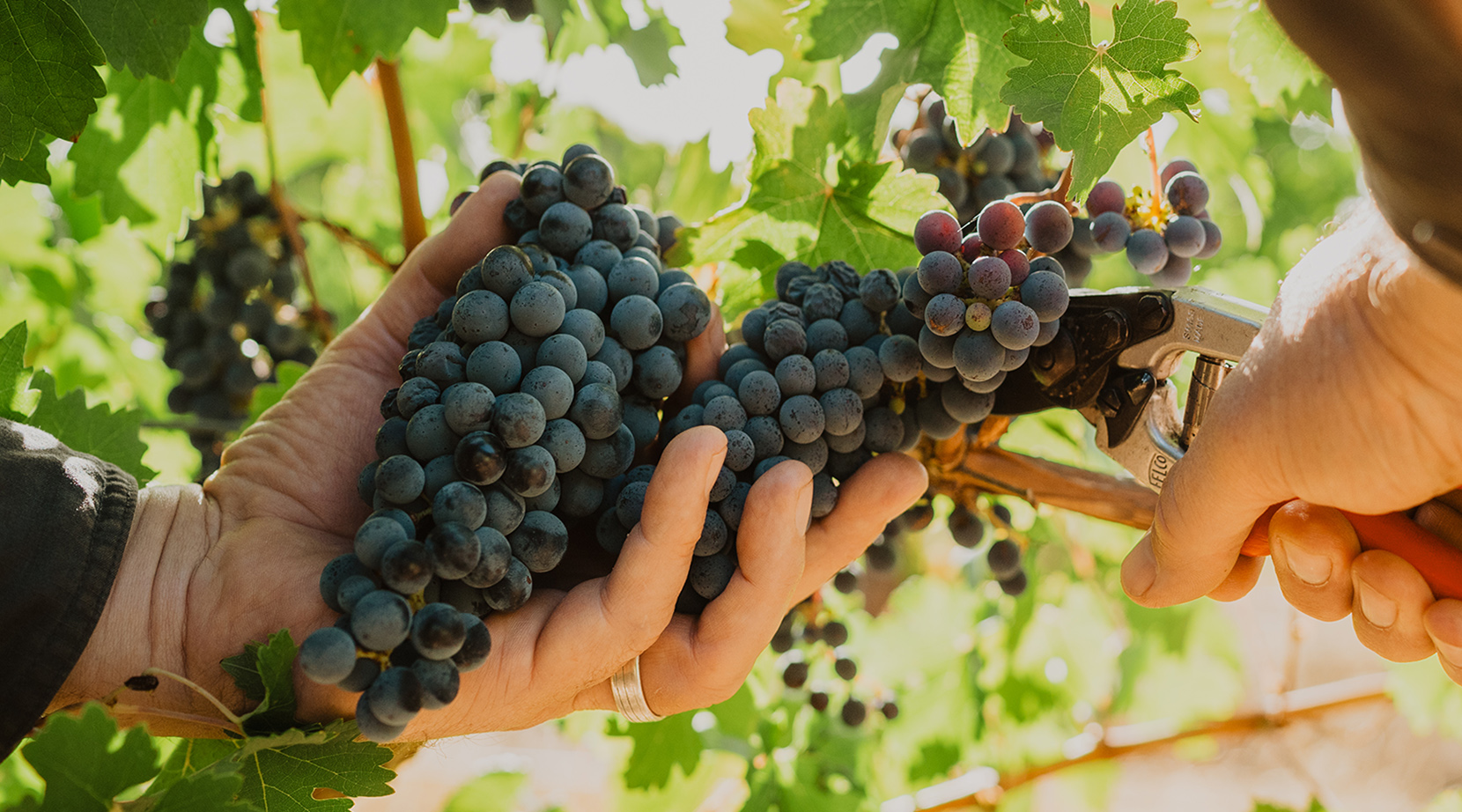
The 2026 growing season was one of balance and gradual progression. A very long and wet winter arrived with genuine gifts: full dams, a thoroughly saturated soil profile, and a foundation for vines to thrive. After a handful of early-season challenges — waterlogged paddocks and the odd bogged tractor — mild, warm weather encouraged exceptional canopy growth across all regions. The Mount Barker vines, in particular, have seldom looked better.
What followed was a growing season defined by steady, unhurried ripening. Absent of the dramatic heat spikes of recent years, cool southerly winds ensured vine stress was minimal and fruit remained in pristine condition right through to harvest. Chief Viticulturist Steve Kirby sets the scene:
“This vintage looks like it will be a more typical season in southern Western Australia compared to the last few warm ones. A wet winter and a mild spring have allowed the grapes to ripen slowly, holding onto their natural acid.”

THE WHITE HARVEST
Harvest opened on 12 February with Chardonnay in Margaret River, followed shortly by Grenache from the Swan Valley. Conditions were well-suited to aromatic whites, with mild warm days and cool nights preserving freshness and lift. Chardonnay, Sauvignon Blanc, and Pinot Gris were all received at the winery by early-March, joined by Pinot Noir destined for sparkling. Our Pemberton fruit, in Steve’s words, looking “amazing on the vine.”
The handpicked Allingham Chardonnay was a highlight: clean, perfectly formed bunches arriving at the winery in exemplary condition. From there, attention shifted south and east.
“Cool southerly winds meant the vines had no stress and canopies and fruit stayed in perfect condition. This favoured white varietals in Margaret River like Chardonnay and Sauvignon Blanc, while Pinot Noir and Riesling came along nicely in the Great Southern.”
Steve Kirby, Chief Viticulturist
GREAT SOUTHERN RIESLING AND THE REDS
With the aromatic whites safely in tank, the team moved to Great Southern Riesling and the Margaret River reds, all harvested in ideal conditions and with good timing. The season’s moderate rhythm proved its worth when Cyclone Narelle emerged off the Western Australian coast in late March. The team watched its progress closely, with Cabernet Sauvignon still on the vine.
Fortunately, the cyclone tracked inland well to the north of the growing regions, leaving the vineyards to receive what amounted to a welcome drink of water rather than any damaging weather. It was a moment that underlined just how well-positioned the season’s careful pacing had left the winemaking team.
CABERNET SAUVIGNON: SLOW AND STEADY
The Cabernet harvest was characterised by patience and precision. Cooler autumn days and cold nights in the later weeks of the season allowed tannin ripeness to develop in step with sugar levels — a hallmark of wines with genuine structure and ageing potential.
The last Margaret River Cabernet block on the Leston vineyard was picked on 10 April, with the Abercrombie vineyard in the Great Southern the final parcel of the vintage. Yields across Cabernet were somewhat lighter than anticipated, though Steve notes this often correlates with wines of greater concentration and character.
“Yields across the board have been balanced – what we were hoping for. Cabernet has been a little lighter than hoped, but this may well lead to some cracking wines.”
Steve Kirby, Chief Viticulturist
LOOKING AHEAD
The 2026 vintage enters the cellar in excellent shape. Clean fruit, well-held natural acidity, and tannins that ripened at their own pace point to wines with real definition. The whites – led by Chardonnay, Sauvignon Blanc, and Riesling – should reflect the season’s freshness and poise. For the reds, and Cabernet in particular, the slow build toward autumn suggests wines worth watching over time.